

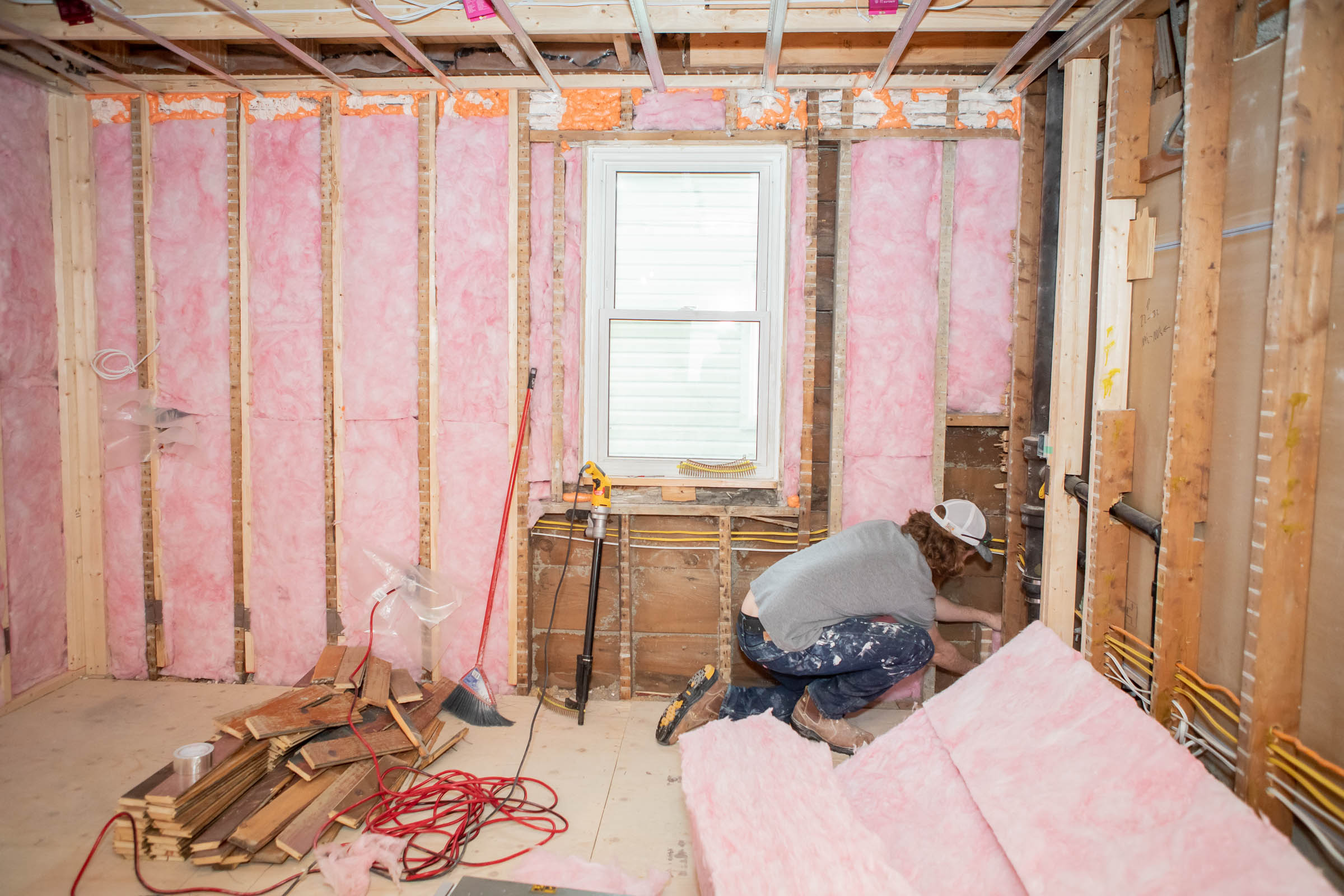
Insulation: What’s Best for Your Renovation?
Wellington County Craftsman – Renovating for Comfort, Efficiency & Quiet Living in the Waterloo Region
When renovating your home, insulation may not seem glamorous, but it is crucial. Proper insulation influences not only your energy bills, but also your home’s comfort, air quality, and even sound levels. At Wellington County Craftsman, we frequently receive the question: Should I use spray foam or batt insulation? And what about soundproofing? Here’s a breakdown to assist you in making the best choice for your renovation project in the Waterloo Region.
What’s the Difference Between Spray Foam and Batt Insulation?
Spray Foam Insulation
Spray foam is applied as a liquid and expands into a solid, air-sealing foam. It comes in two types: open-cell and closed-cell.
Pros:
- Exceptional air sealing – Reduces drafts and prevents moisture intrusion
- Higher R-value per inch – Especially with closed-cell foam
- Great for tight or irregular spaces – Fills gaps around wiring, pipes, and framing
- Acts as a vapor barrier – Significant in basements or crawlspaces
Cons:
- Higher cost upfront than traditional batts
- Requires professional installation
- May not be the best choice in all wall assemblies or historic homes
Best For:
- Exterior walls
- Rooflines and attics
- Rim joists and basements
- Renovations where air leakage is a concern
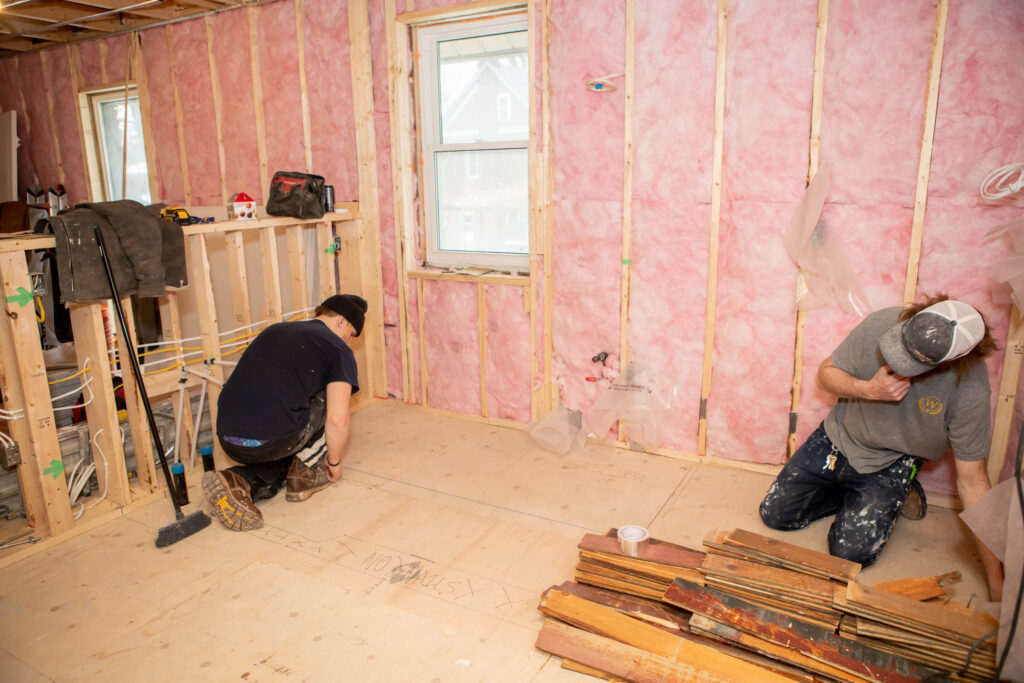
Batt Insulation (Fiberglass or Mineral Wool)
Batt insulation is the familiar pink or yellow roll, cut to fit between wall studs, joists, or rafters. It’s affordable, widely available, and quick to install.
Pros:
- Cost-effective
- Easier to install in open wall cavities
- No off-gassing or curing time
- The mineral wool version is fire-resistant and sound-absorbing
Cons:
- Less effective at air sealing (requires a separate vapor barrier and sealing)
- Can settle or shift over time
- May leave small gaps if not installed precisely
Best For:
- Interior walls
- Ceilings between floors
- Rooms where budget is a top concern
Don’t Forget Soundproofing
During a renovation, adding sound insulation is an often-overlooked upgrade that can dramatically improve the quality of life, especially in:
- Bedrooms
- Home offices
- Basements or rental units
- Shared walls in semi-detached homes
Soundproofing tips we recommend:
- Use mineral wool batt insulation in interior walls for superior sound absorption
- Add resilient channels or double drywall for extra separation
- Install solid-core doors and weatherstrips for noise isolation
- Consider spray foam where air leaks also carry sound (e.g., rim joists or duct chases)
So… Spray Foam or Batt?
There’s no one-size-fits-all answer. The right insulation depends on your goals, your budget, and your home’s layout.
Situation | Recommended Option |
Sealing cold drafts & improving efficiency | Spray foam (closed-cell) |
Budget-friendly insulation | Fiberglass batts |
Reducing noise between rooms | Mineral wool batts |
Renovating an attic or basement | Spray foam or hybrid approach |
Eco-conscious choices | Mineral wool (recycled materials, low VOC) |
Thoughtful Renovation = Comfortable Living
At Wellington County Craftsman, we take pride in building smarter homes. Whether you’re opening up walls or finishing a basement, we’ll help you make strategic insulation choices that enhance comfort, reduce energy waste, and add long-term value.
Ready to insulate wisely? Contact us today to book a consultation, and let’s build a better home together.